There is a certain kind of client we see all the time.
They’re doing all the right things and checking every box. Anyone from the outside would say they’re 100% locked in.
And yet, the scale does what the scale does sometimes. Nothing.
Weeks go by and the frustration builds.
They message their coach with a version of the same question.
“I’m doing everything and the scale isn’t moving.”
That’s usually where the real coaching begins. Most of the time the answer is not that the client suddenly lost their discipline or the plan magically broke overnight. It’s a lot simpler than that.
The answer is sitting inside the space between what was logged and what actually happened.
That space is where progress gets lost.
A food log can look clean at first glance. The macros and the calories are close if not spot on. The client feels like they did their part, but when the coach looks closer a different story starts to unfold.
The eggs were cooked in olive oil, but the oil was entered as a teaspoon. Was that really the amount of oil placed in the pan? The toast had butter, but the spread was guessed. The coffee had creamer, but the creamer never made it into the app. Lunch was a chicken salad, but the chicken entry didn’t say what it was cooked in and the avocado was entered as a quarter, even though half of it ended up on the plate. The ranch was “a drizzle,” which usually means the bottle had a small emotional event over the salad.
Later in the day, there was an apple with peanut butter. A tablespoon was logged and yet the spoon in real life was doing a little too much. Dinner was spaghetti with ground beef, a side salad, some dressing, a glass of wine, and a few tastes of marinara while it simmered.
Then there was the bite off the kid’s plate or a little taste of dinner while cooking. It’s the small, normal, human things that we all do every day.
The problem is that those harmless things feel too small to matter, but the body still counts them. And those small moments can make all the difference in a fat loss transformation.
The Body Responds to the Real Day
Your body won’t respond to the cleanest version of your food log. It responds to the real day.
It responds to that oil in the pan, the bites standing at the counter, the weekend dinner that got lightly estimated, the restaurant meal that looked healthy but came out of a kitchen using butter like a signature font.
Let’s be clear, that does not make those foods bad. It just means that they’re part of the data. And nutrition tracking is all about data.
Your coach isn’t opening your log like a detective with a flashlight and a grudge, ready to make you feel bad for your weekend meal. They’re opening it because the log is the map. When the map is wrong, the route gets messy. Dirty data in means dirty results out.
When you take the emotion out of your eating and look at it as information, you want to make sure you give the most accurate information possible so that your coach has the ability to make clean adjustments. Blurry information makes everyone guess. And guessing is usually what got the client stuck in the first place.
A client can believe they are tracking because they are entering food into an app. A coach sees the difference between tracking and estimating.
Estimating sounds responsible from the outside. It looks like effort and it feels close enough to the accuracy that it doesn’t feel like lying. Most clients aren’t trying to lie about their food intake. They’re busy parents, professionals, business owners that have extremely full lives and a limited amount of time to input their meals. We get that!
The problem is that the small moments are causing the setbacks you don’t want to deal with.
The Peanut Butter Problem

Every coach has seen some version of what they call “the peanut butter problem.”
A client logs one tablespoon with oatmeal. The day looks fine. The calories look fine. Nothing jumps out as a major issue.
Then the coach asks them to weigh it.
Suddenly, the tablespoon becomes two and a half tablespoons.
There it is.
A plateau that felt mysterious for six weeks gets explained in thirty seconds.
This is why we ask clients to weigh calorie-dense foods in grams. You don’t need to track the exact amount of spinach you eat because leafy greens aren’t going to be the reason the scale is stuck.
Instead think about things like peanut butter, oils, nuts, cheese, dressing, sauces, avocado, rice, pasta, granola, butter, and meats. They all deserve more attention because they move the needle quickly.
One casual pour of olive oil can add more than a client realizes. A spoonful of peanut butter can double before it ever feels like a double serving. A “little dressing” can become the difference between a deficit and maintenance.
The food scale isn’t meant to make your life smaller but instead to give better clarity and to help inform the data. Once you see the portion for what it is, you can decide how to use it.
That information gives you all the power. You can still choose the peanut butter. You can still cook with oil. You can still have the dressing. But now you’re choosing it with your eyes open instead of hoping the math works out later.
Accuracy does not take freedom away. Accuracy gives freedom back because it removes the guessing.
And guessing is where the chaos lives.
The Log Has to Lead the Day
Once you understand where the calories are leaking, the next conversation is usually about timing.
A lot of clients are trying to track the day after the day already happened. They eat breakfast while rushing out the door. They grab lunch between meetings. They take bites while making dinner. They forget the creamer, underestimate the oil, and tell themselves they will remember everything later.
By the time they open the app at night, the day has become a blurry little crime scene.
The coach can almost see it happening.
“What did you have for dinner?”
“Chicken, rice, and vegetables.”
“How much chicken?”
“Probably four ounces.”
“Was it weighed raw or cooked?”
“I’m not sure.”
“What was it cooked in?”
“Maybe some oil.”
“How much oil?”
“I don’t know. Just a little.”
This is how a clean-looking log becomes dirty data.
The client didn’t fail. They waited too long to build the day.
So, that’s why pre-logging matters so much.
The food log works better as a planner than a diary. A diary tells the story after it has already happened. A planner gives the day a direction before hunger, stress, convenience, and decision fatigue start making choices on behalf of the client.
When breakfast, lunch, dinner, and protein anchors are already entered, you have a plan to come back to. Your day can still change. Life is going to do what life does. But now you’re adjusting from structure instead of starting from scratch.
That one shift changes the entire tone of the day. You no longer need to stand in the kitchen at six o’clock, tired and hungry, trying to solve your macros. You already know the direction. You know what fits so you know what to do.
That can be the difference between staying in control and handing the whole evening over to whatever is easiest.
The Bites Have to Become Visible
After you start weighing the obvious foods and pre-logging the main meals, the next layer is usually the most obvious.
The BLTs.
Bites, licks, and tastes.
Your log looks complete, but the real day has a few extras hiding between the lines.
These moments rarely feel like eating. You don’t sit down with a plate and think, “I am having a snack.” Instead, it’s the little bits you eat while standing, moving, talking, helping, and multitasking. The food barely registers. But the body registers it.
The important shift is to make sure those bits make it into the food log. Then, the coach can see why the day that looked perfect was actually sitting a little higher than expected. And you can see the difference between “I barely ate anything extra” and “I picked up two hundred calories without noticing.”
The rule is simple: if it goes in your mouth, it goes in the log.
The Weekend Has to Tell the Same Truth
By the time a client understands the BLTs, the next leak usually shows up at the end of the week.
Monday looks dialed. Tuesday looks dialed. Wednesday and Thursday are solid.
Then Friday arrives and the log gets quiet.
Saturday has a brunch entry that feels a little too vague. Dinner is lightly estimated. A few drinks appear as a vague memory. Sunday either disappears completely or gets logged with the optimism of someone who already decided Monday will fix it.
This is where coaches have to be direct because it is one of the most common reasons a fat loss phase stalls.
Weekends are not different countries.
Calories count on Saturday the same way they count on Tuesday. A body doesn’t only respond to the days that were easier to control. It responds to the full week.
That doesn’t mean weekends have to look exactly like weekdays. Kids, sports, travel, dinners, events, and family plans may need a different rhythm. That’s normal and that’s life. A weekend can have more flexibility and still have a standard.
The problem comes when flexibility turns into a blackout. The solution is to plan the weekend with the same honesty as the week.
When you have a dinner out, build the day around that meal. Breakfast can be simple. Lunch can be protein-forward. Snacks can be intentional. Your coach can help shape the day so you enjoy the meal without accidentally erasing the deficit you created earlier in the week.
You can have the dinner. You can go to the birthday. You can eat with your family. You can live your life.
But the weekend still has to be accounted for.
The goal is not a joyless spreadsheet. The goal is a full picture.
Restaurants Need a Strategy Before You Sit Down
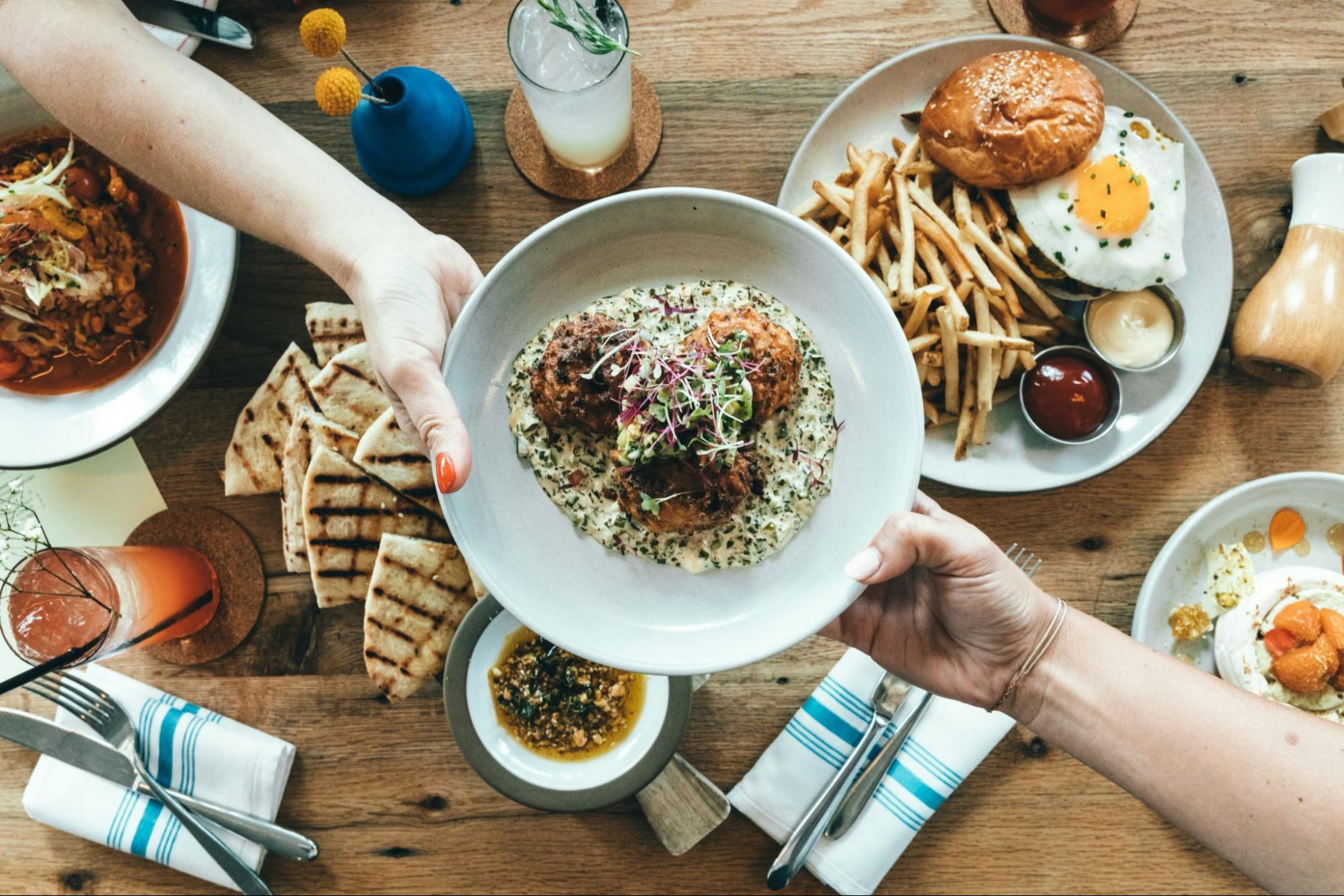
Now, what do you do about restaurant meals? Restaurant meals are one of the easiest places to feel like you made the right choice while still underestimating what happened because it’s so much easier to control all the variables at home.
A salad can look healthy and still come loaded with dressing, cheese, avocado, nuts, and oil. A steak can look simple and still arrive with butter worked into every bite. A grilled chicken plate can be a strong choice, but the kitchen may have cooked it in far more oil than you would ever use at home.
Restaurants are trying to make food taste good, not meet your macros.
So, one way you can better control your own outcome is to look at the menu before hunger enters the room. Pick the meal ahead of time. Send the menu to your coach if the choice feels unclear. Choose foods that are easier to see and easier to track.
A grilled protein with vegetables, rice, potato, or a salad with dressing on the side gives the client something they can estimate with more confidence. A creamy pasta, casserole, loaded bowl, or anything mixed together with hidden ingredients makes the log much harder to trust.
When accuracy matters, simpler foods make the data cleaner. And when the data is cleaner, you get to enjoy the meal without handing the entire night over to a guess.
Raw and Cooked Have to Match
Once you’re weighing food and tracking with more honesty, another hidden issue can show up.
Was it raw or cooked?
It might seem unimportant but this is an important detail when it comes to food tracking. Chicken and beef lose water when they cook. Eight ounces of raw chicken can become six ounces cooked, but the calories didn’t disappear. Rice and pasta move in the opposite direction because they absorb water during cooking.
That’s how you can weigh food and still miss the number. The fix is consistency.
If the food is weighed raw, the entry should be raw. If the food is weighed cooked, the entry should be cooked. Dry pasta needs a dry entry. Cooked rice needs a cooked entry.
You need to learn how to use the same method often enough that the numbers actually mean something. That is how the food log becomes reliable. And reliable data gives your coach something to work with.
The Skill Is Temporary, the Confidence Stays
After nailing all of this, it’s common to ask if this is going to be the way you live forever.
The honest answer is that the intensity changes as the skill develops.
Accurate tracking is a learning phase. It teaches the client what their eyes, appetite, and memory haven’t learned yet.
At first, you probably won’t be great at estimating. You think you know what four ounces of chicken looks like. You think you know what a serving of peanut butter looks like. You think you can accurately say how much dressing is on a salad.
But once you start weighing everything, the evidence helps you build a better eye.
You start to understand portions. You recognize the calorie-dense foods. You plan meals with less friction. You navigate weekends and restaurants with more confidence.
Eventually, the food scale becomes something you can come back to when needed, rather than something you feel dependent on every day.
That’s the goal. The scale teaches the skill. The skill builds confidence.
Confidence gives you freedom later because you earned the ability to estimate with accuracy instead of guessing from the beginning.
Seven Days of Telling the Truth
The shift usually begins with one honest week.
You don’t need to overhaul everything. You just need seven days where the log tells the truth.
You can follow these simple steps:
- Pre-log the day before life starts moving
- Weight the calorie-dense foods instead of eyeballing them
- Track the BLT’s (bites, licks, and tastes)
- Keep the same standard on the weekend
- Match the raw and cooked entries
At night, ask yourself: did I track honestly today?
A yes or no answer tells the story.
Five honest days out of seven can teach more than seven days of a log that only looks good from far away. That week gives your coach something real, and it gives you something real too.
Maybe the scale starts moving again. Your coach finally has enough clean data to make the right adjustments. You might actually realize you aren’t broken, lazy, or stuck because the plan failed. You were working from a version of the truth that had too many missing pieces.
If any of this resonates with you and you’re looking for a coach that can help you build the right plan around your life, apply below. We’ve helped thousands of people heal their relationship with food, and we can do the same for you.