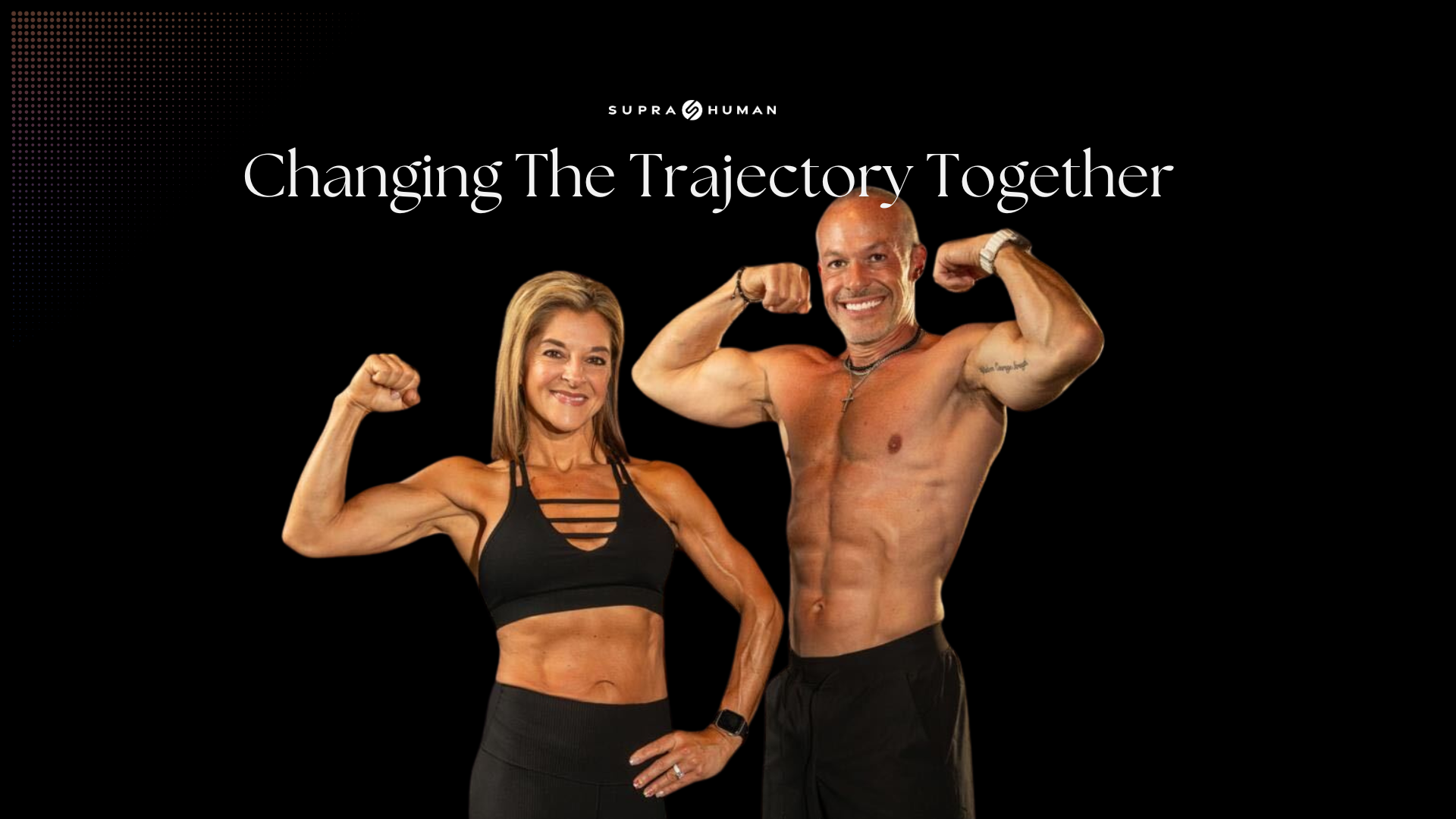
For years, Dan and Michelle Simoni looked like two people who had already figured out the health and fitness equation.
Dan trained six days a week, often spending 90 minutes lifting weights. Michelle was just as consistent, working out five or six days a week through cardio-heavy programs and high-repetition strength workouts. Exercise was not something either of them avoided or struggled to prioritize. If effort alone determined results, they should have been exactly where they wanted to be.
They weren’t.
Behind all that consistency was a growing frustration neither could quite solve. Dan knew how to push himself physically, but had very little understanding of the nutrition side of the equation. Michelle had learned about macros and experimented with different approaches over the years, but nothing seemed to produce results that lasted. Their social life included dinners out several nights a week, frequent travel, and alcohol that had become an almost automatic part of evenings, weekends, and celebrations.
They weren’t sedentary people suddenly deciding to get healthy. They were already working hard and doing the right things on paper. They just didn’t have an answer to why all that work wasn’t translating into the way they wanted to feel, look or age.
“Looking back now, we realize we didn’t have a workout problem. We had a knowledge problem,” they say. “We didn’t understand nutrition, how to fuel our bodies for training, the importance of adequate protein, or how critical sleep and recovery are to long-term health and body composition.”
That distinction would eventually change far more than their bodies. It would alter the way they thought about aging, ambition, their marriage, and what the next decades of their lives could actually look like.
The Moment Effort Stopped Being Enough
For Dan, the catalyst came through a series of experiences connected to drinking too much. They were enough to make him look more closely at the direction his habits were taking him.
At the same time, another frustration had been building. He was putting enormous effort into training without understanding why his body composition seemed unwilling to follow. He had also become increasingly interested in longevity, health, and what it might mean to remain capable as he got older.
When Supra Human entered his world in early 2025, it arrived at a moment when he was ready to stop guessing.
His circumstances made that particularly important.
As an audit partner and geographic leader for PwC, Dan lives inside a schedule that refuses to cooperate with most traditional fitness plans. His weeks can include long hours, high-pressure deadlines, nearly constant travel and a carousel of client outings. Alcohol was common throughout the week, followed by what he describes as “celebratory” weekends for surviving everything that had come before them.

There was no realistic version of his life in which business travel suddenly disappeared, client dinners vanished or his career became less demanding. Whatever he chose had to work inside the life he actually had.
Before joining, Dan had spoken with both a personal trainer and a nutritionist, but neither approach seemed built for that reality. What he needed was not another pristine plan that worked beautifully when life behaved itself. He needed to understand how to make decisions when it didn’t.
When he joined Supra Human in March 2025, the objective was almost simple.
“I wanted to look better,” he says.
Only four months later, he puts the result just as simply: “I was ‘ripped.’”
Dan eventually went from roughly 22% body fat to 6% after each of his first two cuts while adding significant muscle and definition. He has maintained visible abdominal definition for more than a year.
But if his story had stopped there, it would have been a successful fitness transformation and little more. What surprised him was everything that began changing around the result.
“I had no idea how much education I would receive about nutrition, recovery, sleep, hormones, and overall health,” he says. “I also didn’t expect the level of engagement from the coaches or how much the community would become such an important part of the experience.”
The more he learned, the less health felt like a collection of isolated behaviors. Training connected to food. Food connected to recovery. Recovery connected to sleep. Alcohol was no longer simply calories in a glass, but something he could see affecting energy, performance and the way he felt the next day.
For perhaps the first time, the effort he had always been willing to give had a framework underneath it.
Then Michelle started watching.
“I Started to Think Maybe This Was Just the New Reality”
Michelle joined Supra Human because she saw her husband changing in front of her.
The physical difference was obvious, but it was the subtler shifts that caught her attention. Dan was sleeping better, drinking more water, he had more energy, and his habits felt more intentional. The way he experienced life changed, the actual day-to-day didn’t. He wasn’t fitting his schedule around the plan and he definitely wasn’t living life in constant restriction.
“He was simply becoming a healthier, happier version of himself,” Michelle says.
She wanted that too.
For much of that chapter, putting herself first had been easy to postpone. There was always something else that needed attention.
Now the house was quieter, the children were grown and a question she had managed to defer for years became harder to ignore: if not now, when?
“That season of life made me realize something,” she says. “If I was ever going to invest in myself, the time was now.”
Physically, she felt increasingly disconnected from the body she wanted. Because of her petite frame, even small fluctuations in weight felt significant to her, yet losing two or three pounds had often seemed unusually difficult. She wanted to lose around 10 pounds, lower her body fat, and build the lean, strong physique she imagined for herself.
She was also experiencing menopausal symptoms and hormonal changes she didn’t fully understand.
After years of trying different workouts, diets, and macro-based programs, skepticism had started to calcify into resignation.
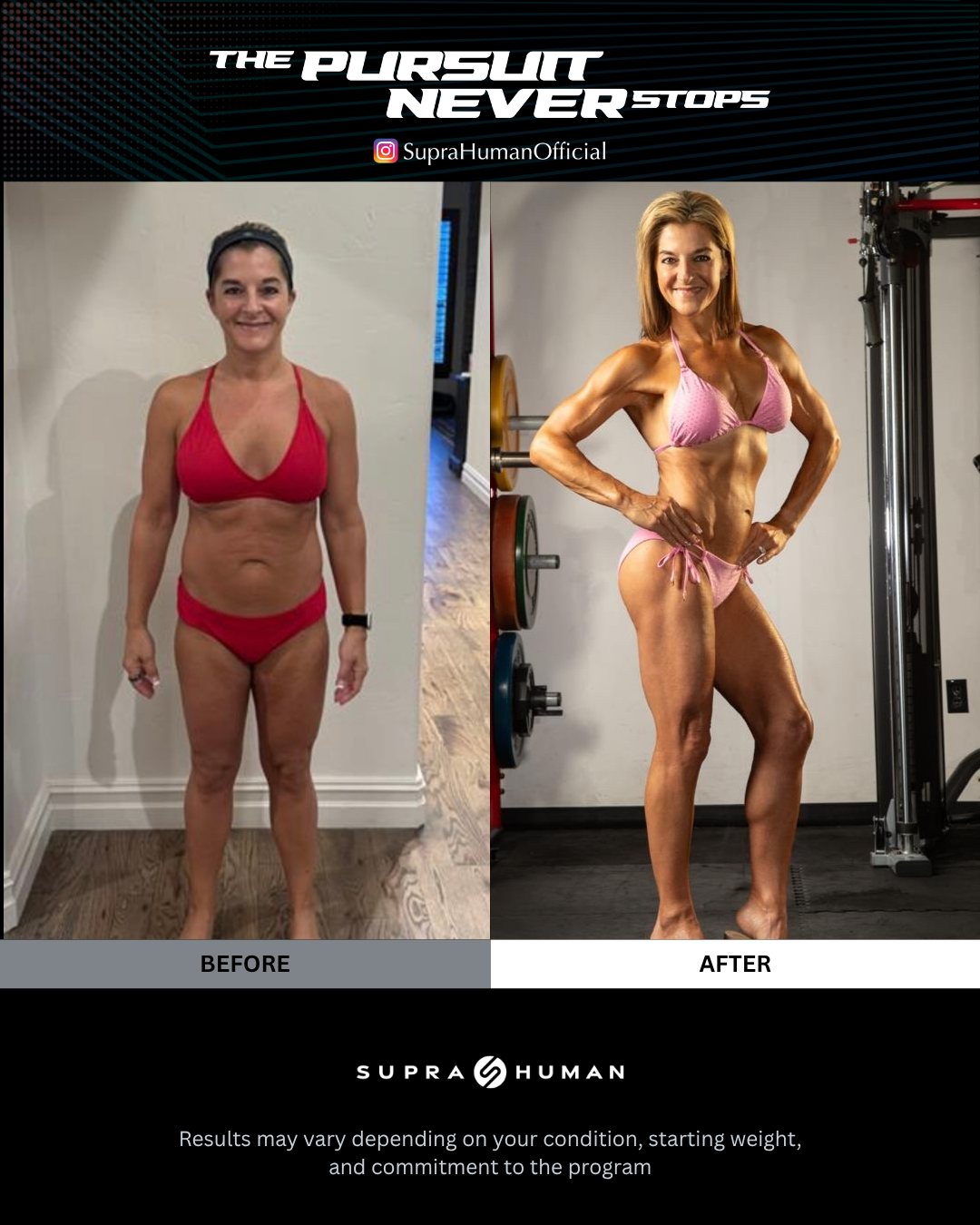
“I felt like I had already tried every approach,” Michelle says. “Nothing had ever produced lasting results. At 52 years old I was experiencing menopausal symptoms and hormonal shifts I couldn’t make sense of. I started to think that maybe this was just the new reality that I had to learn to accept.”
Then she attended an Elite Fly-In with Dan.
The experience gave her something she had not expected to find in a fitness program. She found people she actually wanted to be around. She began forming meaningful friendships almost immediately and saw a community filled with people pursuing similar goals without requiring them to shrink the rest of their lives around those goals.
This time, she wouldn’t be doing it alone.
“Knowing we were in this together and approaching it the same way made it seem different this time,” she says. “I all of a sudden felt a new excitement and motivation to finally reach my goals.”
Michelle joined Supra Human in September 2025.
A Transformation That Didn’t Require Them to Stop Living
The measurable results arrived.
Michelle lost 15 pounds and reduced her body fat to below 10 percent after her first cut, reaching a level of leanness she had once doubted was even possible for her. Dan continued building on his first transformation through another year of training, nutrition, and coaching.
But one of the most interesting facts about their transformation journey is how little their actual life had to disappear in the process.
Dan still travels. They still vacation. They recently spent three weeks in Hawaii. They still eat at restaurants several nights a week, whether for client dinners, time with friends, or dinner together. They still celebrate birthdays, holidays, and special occasions. They still enjoy alcohol, although far less frequently than before.
The difference is that those moments are no longer interpreted as evidence that they have fallen off track.
For years, Michelle remembers the familiar rhythm of staying disciplined Monday through Friday, feeling as though the weekend erased the work, then mentally starting over again when Monday arrived.
That cycle is gone.
“One of the biggest mindset shifts Supra Human gave us was realizing that one meal, one day, or even one vacation isn’t going to undo months of progress,” they say. “You enjoy the experience, and when you get home, you simply get back to your routine. There’s no guilt, no ‘starting over on Monday,’ and no feeling like you’ve failed.”
That freedom may be one of the least visible parts of their transformation, but it is also one of the reasons they believe the changes will last.
Their health no longer exists in opposition to their life. It belongs inside it.
“We were surprised by how little it feels like we’re sacrificing,” they say.
Somewhere Along the Way, the Goal Got Bigger
When Dan started, he wanted a better physique.
Now, with mandatory retirement from PwC six years away, he’s thinking about what he wants from an entirely different stage of life.
Before Supra Human, the chapter after PwC naturally existed in his mind as retirement. After spending time around entrepreneurs, executives, and other high-performing members of the community, that definition began to feel increasingly inadequate.
“The energy of this community is infectious,” Dan says. “It’s given me a renewed sense of purpose and enthusiasm that I bring to my work every day.”
More importantly, the people around him changed the way he thought about what happens next.
“It’s inspired me to start thinking about what comes after PwC, not as retirement, but as another opportunity to build, contribute, and continue growing.”
For Michelle, the expansion happened internally.
Her biggest transformation, she says, is confidence.
Not simply confidence in photographs or clothing, although those things have changed too. What matters more is the evidence she now has about herself.
“I’ve learned that I really can do hard things if I’m willing to commit, stay consistent, and refuse to quit on myself,” she says. “That realization has carried over into every part of my life.”
One of John Madsen’s Mental Performance Monday calls became particularly important to her. The challenge was to visualize yourself already succeeding, to see clearly the person you wanted to become and then refuse to stop moving toward that vision.
Michelle began picturing the healthiest and strongest version of herself.
Then she began behaving like her.
The result was larger than a number on the scale because it changed the question she asked when facing something difficult. Instead of wondering whether she could do it, she began thinking, “If I want it bad enough and I’m willing to put in the work, I can achieve it.”
Their Children Were Watching
The one impact of their transformation they didn’t expect was their children’s reaction.
Both of their children have told them how proud they are of what they have done, and that they hope to be as healthy and disciplined when they reach the same age.
For a couple who started this process largely focused on their individual transformations, realizing that their choices had become an example for their children introduced an entirely different kind of meaning.
“Our kids are always watching,” Michelle says. “Knowing that we are leaving them with that example is one of the things I’m most proud of.”
Their influence has spread beyond their children. Friends and family members have watched the changes unfold, asked questions, and begun reevaluating their own health. Three family members have since joined Supra Human themselves.
That ripple effect is something Dan and Michelle never anticipated when they started. They thought they were changing their own bodies.
Instead, people around them began changing too.
Better Together
There is also an obvious alternate version of this story, one in which Dan changed while Michelle stayed where she was, or Michelle decided to become healthier while Dan continued living exactly as before.
Anyone who has tried to change deeply ingrained habits while sharing a home, social life, and dinner table with another person understands how difficult that version can become.
Dan and Michelle never had to navigate it.
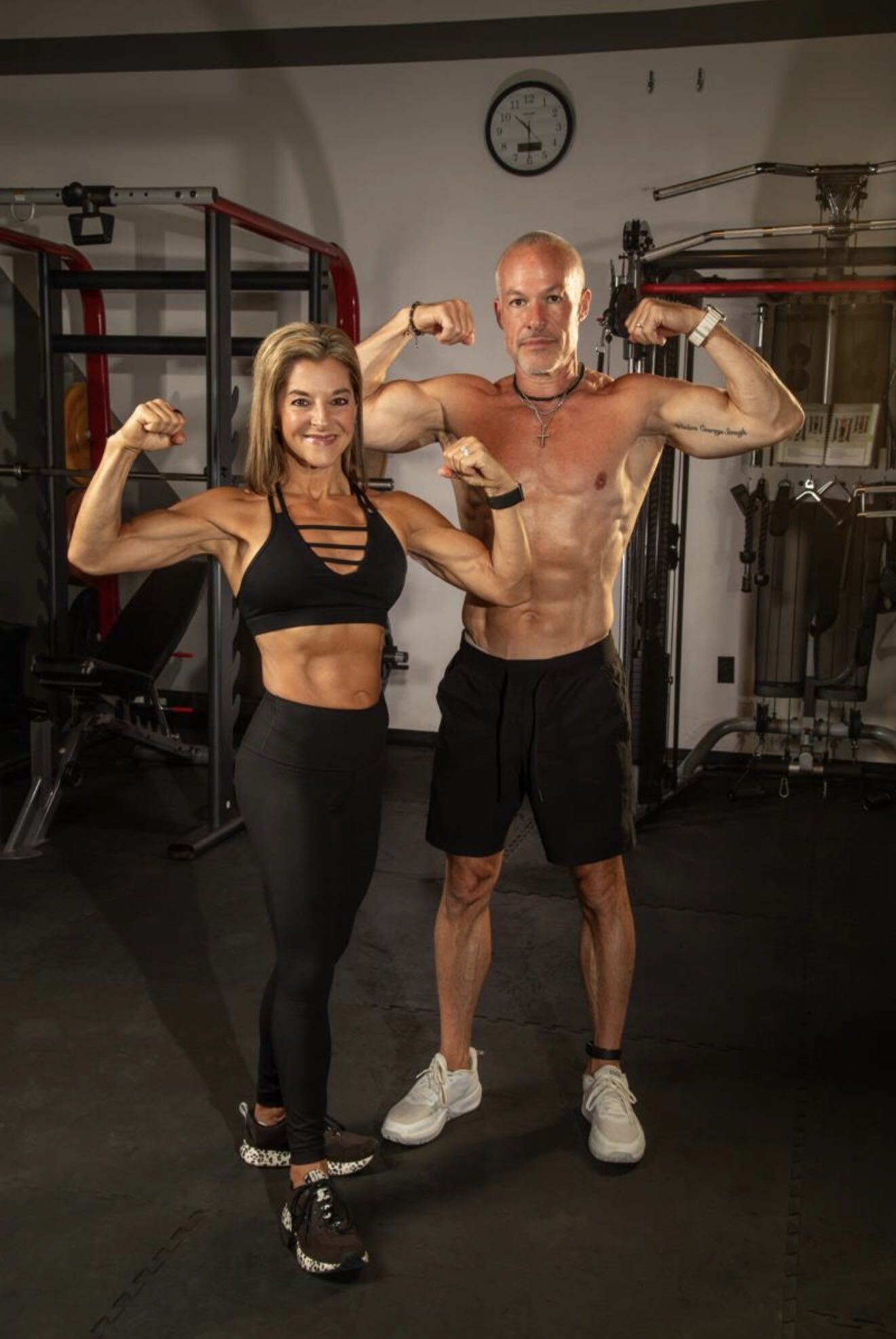
Once Michelle joined, their individual transformations became a shared one. Healthy eating was no longer one person’s project. Training became something they understood and enjoyed together. When motivation disappeared for one of them, the other could provide accountability. Events became shared experiences. Friendships within the community became friendships they built as a couple.
“The fact that we’re doing it together makes it SO MUCH EASIER,” they say.
It has also made it fun.
They travel to events together, train together, encourage one another and now share an entire language around health that did not exist in their relationship two years ago.
“Looking back, joining together was one of the best decisions we could have made,” they say. “We haven’t just become healthier individuals. We’ve become a healthier couple.”
There is something fitting about that outcome. For decades, they built a family and a life together. Now, at a stage when many couples are preparing to slow down, they are building the next version of themselves together too.
Refusing the Slow Decline
When Dan and Michelle imagine what continuing along their previous trajectory might have looked like, they don’t picture some dramatic collapse.
That is precisely what makes the alternative unsettling. It probably would have happened without them noticing until it was too late, like what happens to so many people.
“It would have happened slowly,” they say. “Maybe a few more pounds each year, a little less muscle, giving up on workouts that weren’t producing results. All this leading to a little less energy, a little poorer health, and a gradual acceptance that getting older simply meant feeling worse.”
They no longer accept that premise.
Today, Dan and Michelle talk about their future in the opposite direction. They fully expect to be healthier, stronger, and more capable five or ten years from now.
That belief may be their greatest return on the investment they made.
They once questioned the cost of Supra Human. Now, Dan describes it as one of the best investments they’ve made because of everything their results came to represent: energy, confidence, stronger relationships, friendships, education, and the belief that they are giving themselves a better chance at living not simply longer, but better.
It’s also why Dan ascended to the Elite program and extended his commitment for another year.
“This doesn’t feel like a program we’re trying to survive until it’s over,” they say. “It feels like a lifestyle we’ve chosen because it works, and we enjoy it.”
Seventeen months into Dan’s journey and roughly ten months into Michelle’s, neither is speaking about finishing.
If anything, the language has changed completely.
They are no longer chasing the bodies they thought they should have had years ago. They are building the people they want to be years from now.
“We’ve fundamentally changed the trajectory of our lives,” they say. “We don’t just look different. We think differently, eat differently, and live differently.”
For Dan and Michelle, that is the real definition of transformation.
Sure, it’s great to lose weight and get a six-pack. But the real victory is the realization that this stage of life doesn’t have to be the beginning of becoming less.
It can be the beginning of becoming more.
Transformation gets even more powerful when you do it together. If your spouse is ready to build better habits, feel stronger, and create a healthier future alongside you, invite them into Supra Human and make the next chapter one you build together.