
It was 2021, and I remember the exact position my body was in.
Not sitting, not resting, but curled up on the couch like something in me had finally given out. Mascara was running, I was staring at the ceiling, and I said it out loud in a way that felt final: “I can’t do this anymore! I’m done.”
There wasn’t anything dramatic about the day itself. Nothing you could point to and say, that’s what broke her. It was the accumulation, the kind that builds quietly over time while everything on the outside continues to look like it’s working.
At that point in my life, I was a corporate executive leading marketing and customer success at a tech company. It was a role that came with responsibility, pressure, and a pace that left little margin. From the outside, it looked like progress. From the inside, it felt like I was holding more than I could sustain.
The truth is, that moment wasn’t new. I had experienced some version of it before, in a completely different season of my life, in a completely different career. The setting had changed, but the breaking point hadn’t.
Back then, I called it burnout because that was the word that seemed to fit.
Looking back now, I realize that burnout wasn’t actually the problem.
The Structure No One Questions
For most of my career, I operated under a belief that I never stopped to examine: If you wanted to win in business, you had to give it everything. Not most things, not what was convenient, but everything you had.
Your time, your energy, your focus, and your attention were all pointed in one direction and stayed there long enough to build something meaningful.
And in many ways, that belief is what allowed me to get as far as I did.
What I didn’t understand at the time was what lay beneath that level of focus, or, more accurately, what I was choosing not to see.
While business was getting all of my energy, there were other areas of my life that weren’t disappearing; they were just getting quieter. My body, my home, my relationships, all of the things that actually support a high level of performance, were being pushed further and further into the background.
For a while, you can get away with that. You can skip meals, rely on caffeine, tell yourself you’ll take care of it later, and continue pushing forward because you’re wired to perform.
But eventually, there is a cost to that way of operating. And it will show up. For me, it showed up on that couch.
The Weight Women Carry Differently
I’ve had many conversations with men who have experienced a similar pattern, and there is a common thread running through it. They sacrifice their health and time at home to build something that matters, with the intention of providing stability down the line.
For women, especially career-driven ones, it rarely looks that clean.
There is the career, the ambition, the desire to build and lead at a high level, but there is also the parallel responsibility of everything happening at home. There is a constant awareness of what needs to be done, what hasn’t been done, and what cannot be dropped.
There is a quiet pressure to show up fully in both places without letting either one slip.
And somewhere in that tension, you start to disappear.
It doesn’t always feel obvious in the moment, but in a way that becomes undeniable over time. You stop paying attention to your body, you stop prioritizing your own needs, and you start functioning as if you are the one piece that can be neglected without consequence.
When I look back at that version of myself, I don’t even like describing it as a sacrifice.
It felt more like I was disregarding my own foundation entirely, operating as if my body and my well-being didn’t matter in the equation.
Eventually, everything I was trying to build rested on something very unstable.
Why Burnout Wasn’t the Problem

The clearest way I can explain it now is this.
I had built my life upside down.
I talked about this in detail at our recent Elite Fly-In, and you can see the entire speech here.
Business was carrying all the weight, all the pressure, all the expectations. Underneath that, and barely supporting anything, were my body and my home.
So when the pressure inevitably increased, there was nowhere for it to go.
It all condensed into a single point, and that point was me.
That moment on the couch wasn’t a random breakdown. It was the natural outcome of a structure that was never designed to hold what I was asking it to hold.
Rebuilding in the Right Order
What changed for me wasn’t walking away again. It was learning how to rebuild my life in a completely different order.
I had to learn how to become the CEO of my body before I could continue trying to lead at a high level anywhere else. That didn’t mean a temporary phase of “getting back on track.” It meant creating standards that didn’t shift based on how busy I was or how demanding my schedule became.
I stopped skipping meals because it was easier to power through. I stopped treating workouts like they were optional or something I would get to if I had time. I started paying attention to how I was fueling myself, how I was recovering, and how I was actually showing up physically on a daily basis.
That shift required me to do things that would have felt uncomfortable to me before. It meant eating during meetings if I needed to. It meant turning my camera off and not over explaining it.
The version of me who ended up on that couch would have never allowed herself to do that.
But that version of me also believed she could outwork a broken foundation.
Bringing Structure Into the Home
The shift inside my home took even more intention, because it required me to rethink what leadership looked like there.
For a long time, I approached home as something I responded to rather than something I led. It was reactive, emotional, and constantly shifting based on what needed my attention in the moment.
What I eventually realized is that if I wanted to operate at a high level in every area of my life, my home needed the same level of structure as my business.
That meant creating systems, processes, and a way of operating that didn’t rely on me carrying everything mentally at all times.
It also meant confronting patterns that had been there for years. Patterns rooted in putting myself last, in making sure everything else was handled before I even considered what I needed.
Those patterns don’t disappear overnight.
Even now, they show up, and I have to be aware enough to catch them.
The Foundation That Changes Everything
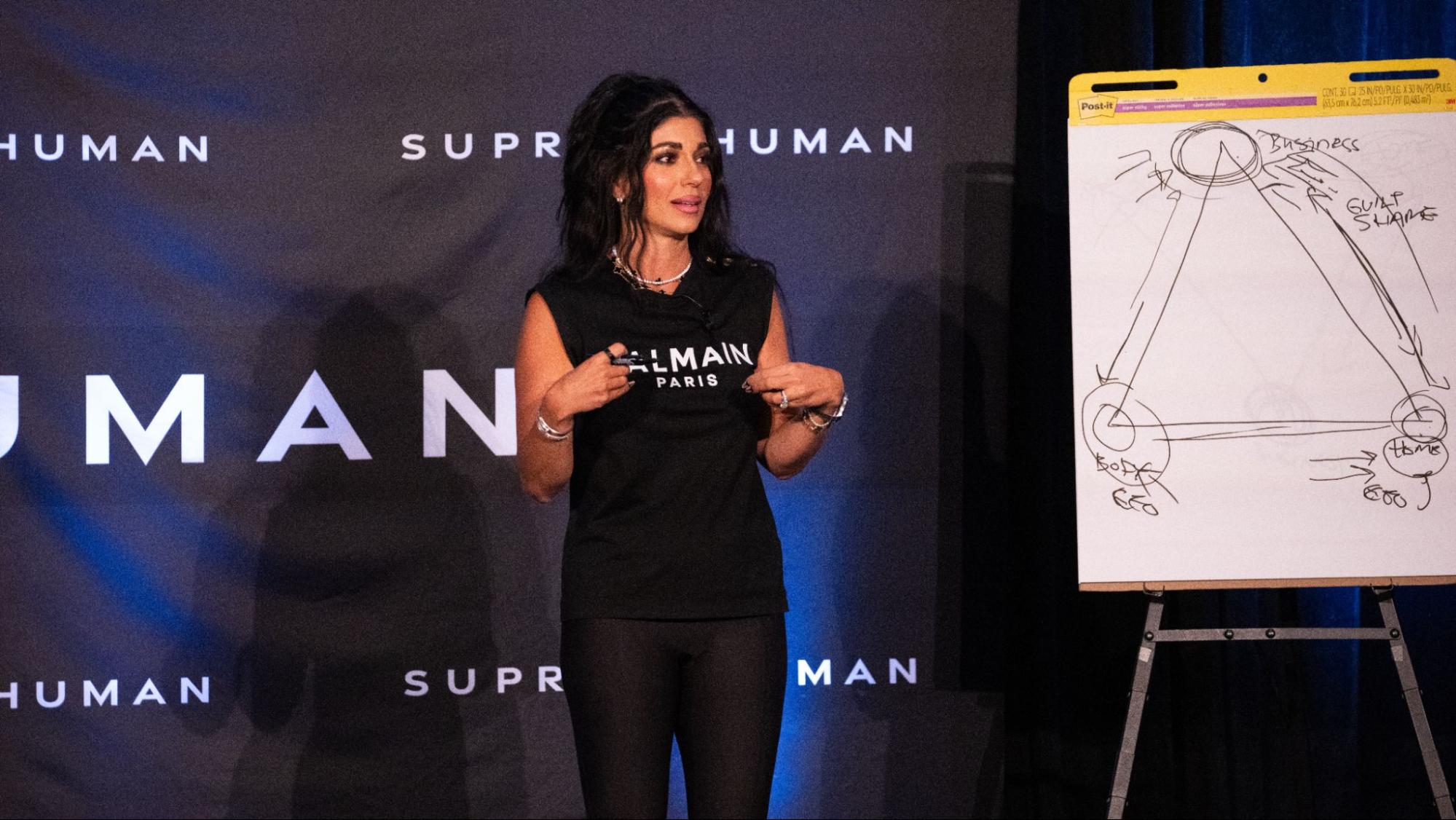
The difference now is that everything in my life sits on something stable.
My body comes first, not because it is more important than everything else, but because everything else depends on it.
My home comes next because it is the environment that either supports or drains the way I show up everywhere else.
And then there is business, which now has a foundation strong enough to sustain the level I expect from it.
What I’ve found is that performance in business doesn’t suffer when you prioritize these things. It improves because it is no longer built on something fragile.
The Resilience I Didn’t Have Before
There are still moments when the pressure feels heavy, the responsibility is real, and the thought crosses my mind that this is a lot to carry.
That part doesn’t go away when you choose to operate at a high level.
What changes is your capacity to hold it.
Resilience and endurance are not traits you suddenly access in those moments. They are built over time through the standards you keep and the way you take care of yourself when it would be easier not to.
I didn’t have that before. Now I do. And because of that, I don’t go to the same place when things get hard.
I won’t quit.
Fix the Structure, Not the Ambition
If there is one thing I understand now that I didn’t then, it’s that most people do not have an ambition problem.
They have a foundation problem.
They are trying to carry more than their life is built to support, and when it becomes overwhelming, they assume something is wrong with them.
In reality, it is the structure that needs to change.
When you rebuild that structure in the right order, everything else becomes possible at a level that actually lasts.