
“I knew I needed to make a change,” she says, “but I don’t think I fully understood just how much that change would impact my entire family.”
When Mom’s “Diet” Became the Way the Family Lived
Lorena is a surgeon, a wife, and a mother of three children, ages 12, 9 and 5. Her life was already full before she decided that taking care of herself had to become part of it. There were demanding call schedules, travel for her children’s sports, marriage, motherhood, and the endless responsibilities that come with maintaining a home and raising a family.
Like so many mothers, she had become exceptionally good at caring for everyone around her. Somewhere along the way, however, she had stopped including herself in that care.
When Lorena first joined Supra Human, her children referred to what she was doing as Mom’s “diet.” They saw her tracking her food, prioritizing protein, working out, and making sure she got her steps in. At first, it was simply something their mom was doing for herself.
Over time, that distinction disappeared.
“It stopped being my ‘diet,’” Lorena says. “It just became how we live.”
There was no formal family conversation about nutrition or performance. Lorena didn’t sit her children down and explain how protein supported their bodies or lecture them about consistency. They simply watched her long enough for those ideas to begin becoming normal inside their home.
Her children started talking about protein and becoming more conscious of the choices they made around food. They began understanding that nutrition was not simply about weight or appearance, but about fueling their bodies for the things they wanted those bodies to do.
For her two older sons, both competitive athletes in baseball and hockey, that mindset soon moved beyond nutrition and into the way they approached their sports. Team practices were no longer the only work that counted. On their off days, they began creating goals for themselves. One might decide to take 100 hockey shots. Another might commit to hitting off the tee 100 times.
Without anyone forcing them, they were learning that improvement often happens when no one else is telling you to work.
Our Children Learn the Standard We Live
Lorena’s coach, Brittney, has watched that shift happen from another vantage point. Throughout the transformation, perfect circumstances have been rare. Lorena has navigated demanding hospital schedules, constant travel for her children’s sports, difficult stretches of sleep and stress, and even an unexpected surgery and recovery of her own.
Despite those variables, Brittney says the pattern has remained remarkably consistent. Lorena controls what she can control, adjusts when life requires something different and continues moving forward.
“There is simply no quit in her,” Brittney says.
That does not mean Lorena has executed perfectly every week. In fact, some of the most important progress has happened in the moments when she learned to stop expecting perfection from herself. There were weeks when her work schedule made training difficult, periods when exhaustion caught up to her, and stretches when she couldn’t operate at the standard she normally expected of herself.
Earlier in life, those moments might have triggered an all-or-nothing response. Now, Lorena understands that high performance doesn’t always mean doing more.
Brittney describes it as one of the most meaningful parts of watching Lorena’s journey unfold.
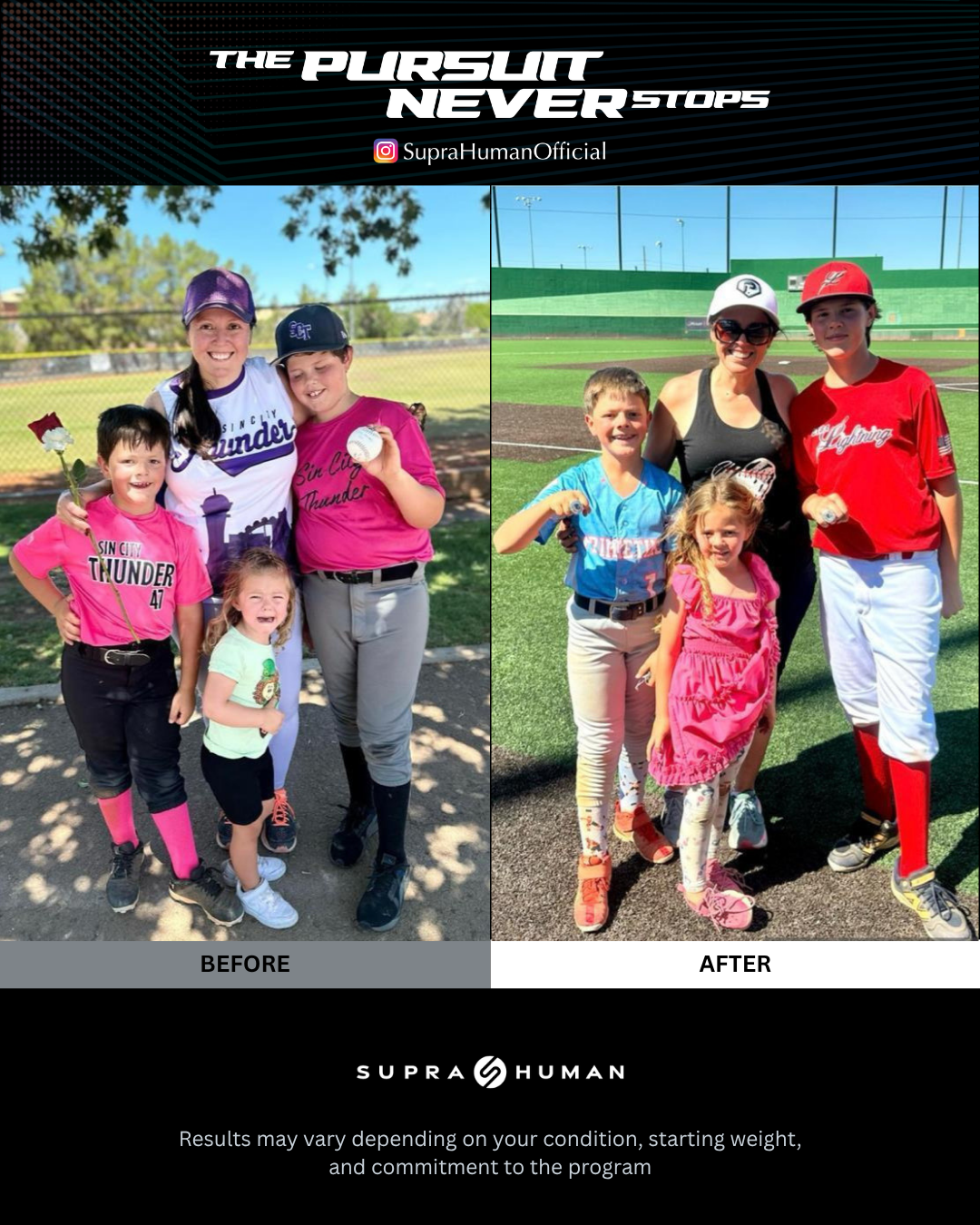
“Her kids aren’t simply watching their mom change her body,” she says. “They’re watching her keep promises to herself, get up early, train, prioritize her health, recover when necessary, and still intentionally choose family when family matters most.”
Her Children Became Accountability Partners
Her children have gradually become some of her biggest accountability partners. They ask whether she has gotten her steps in and whether she has completed her workout. They ask her to go for walks with them.
Sometimes her 9-year-old wakes up before she does and comes into her bedroom because he wants to walk with his mom before she leaves for work.
There are mornings when Lorena is exhausted. There are mornings when she knows exactly how demanding the day ahead is going to be. There are mornings when staying in bed would be easier.
Then her son is standing beside her asking if they can go walk together.
“Talk about accountability,” she says. “How do you say no to that?”
Her youngest daughter has been watching too. At just five years old, she regularly asks to do “workouts” with Lorena because she wants to be “strong and healthy like Mommy.”
“That one gets me every time,” Lorena says.
The moment carries more weight than her daughter can understand yet. Lorena knows she is not simply teaching a little girl how to exercise. She is influencing the way her daughter is beginning to think about her own body.
“She’s learning that her body is strong and capable and worth investing in,” Lorena says. “Health isn’t about being skinny or having the ‘perfect’ body. It’s about being strong and healthy, exactly as she says.”
For a mother, there may be few transformations more meaningful than watching a daughter begin her relationship with her body from a place of capability rather than criticism.
Lorena has watched the same philosophy begin to take root in her sons. Her oldest decided that he wanted to become a faster runner. At the beginning of baseball season, he was the slowest player on his team. By the end of the season, he had become the second fastest.
The physical improvement was exciting, but what Lorena loved most was watching him understand how it happened.
“They’re learning that you don’t have to be the best when you start,” she says. “You just have to be willing to work, stay consistent, and keep getting better.”
Children absorb the standards of their homes long before they have language for them. They notice when effort is normal. They notice whether difficult things are avoided or worked through. They notice whether their parents’ goals disappear every time the family gets busy.
Lorena’s goals didn’t disappear, but they also didn’t require her to remove herself from her own life. She still celebrates birthdays and holidays. She travels with her family, attends her children’s events, and enjoys date nights with her husband.
Part of her transformation has been learning that health does not need to exist in opposition to the rest of her life.
How Attending SHX Amplified Her Transformation
Brittney saw a significant shift after Lorena attended SHX in 2025. Lorena told her that she no longer wanted to “just lose weight and be healthy.” She wanted more from herself. What had begun as a physical goal was becoming an identity change.
The woman pursuing the transformation was different from the woman who had started it.
Motherhood has a way of making self-sacrifice feel virtuous. There will always be another practice to drive to, another appointment, another deadline, another meal to prepare and another person whose needs seem more urgent than your own.
Over time, putting yourself last can begin to feel synonymous with being a good mother.
Lorena has come to see it differently.
“I’ve learned that taking care of myself isn’t selfish,” she says. “It’s one of the ways I take care of them.”
That realization changed the way she thought about her own health because eventually, there is a contradiction children can see. Parents can’t spend years telling their children that their health matters while acting as though their own does not. They can’t teach consistency while repeatedly abandoning themselves when life becomes difficult. They can’t tell their children their goals deserve effort while quietly deciding their own goals are no longer worth pursuing.
“I can’t expect my kids to value things that I don’t value in myself,” Lorena says. “I can’t tell them that consistency matters if I quit when life gets busy or tough. I can’t tell them their goals are worth working for if I don’t show them that mine are too.”
So she continues showing them. Some days that means training when she’s tired and would rather not. Other days it means choosing recovery because it’s what her body needs. Sometimes it means getting her steps in with a child walking beside her.
The lesson is not perfection. The lesson is that she keeps returning to the standard she has chosen for herself.
The Transformation a Before-and-After Cannot Show
There is a tremendous amount a transformation photo can capture. It can show weight lost, muscle built and the visible evidence of hundreds of decisions made over months and years. Lorena’s transformation image certainly showcases all of her hard work.
What it can’t photograph is the nine-year-old who wakes his mother because he wants to walk with her.
It can’t capture two young athletes deciding that practice does not have to end when their coach leaves.
It can’t show a five-year-old girl beginning to associate strength with the woman she hopes to become.
It can’t photograph the culture of a family changing.
“Lorena may be the one whose before-and-after photos we see,” Brittney says, “but what she has built reaches far beyond those photos.”
That may ultimately be the most meaningful result of the entire journey.
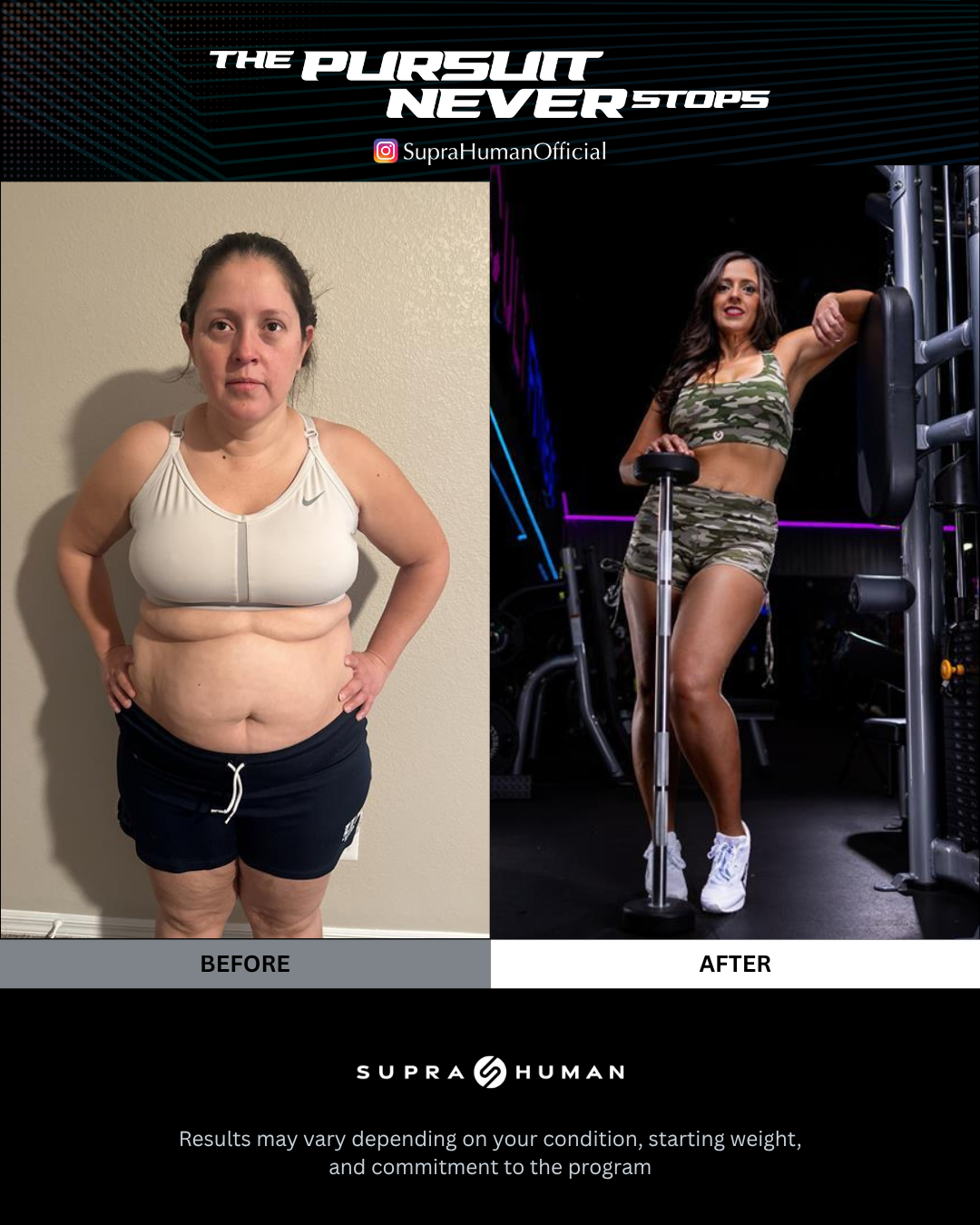
Lorena started Supra Human because she wanted to change her own health. Over time, that decision changed the conversations happening around her dinner table, the way her children thought about food, the way her sons trained for their sports, and the way her daughter thought about what she wanted her body to become.
“I started Supra Human because I wanted to lose weight,” Lorena says. “But I’m so grateful that Supra Human turned out to be so much more than a weight-loss program. It became a lifestyle change, one that has changed the culture of our entire family.”
What Will They Remember?
Someday, Lorena’s children will be adults. The hockey shots and baseball practices will become childhood stories. The early alarms will stop going off in the house they all once shared, and each of her children will eventually become responsible for a body and a life of their own.
Lorena knows they probably will not remember the details of her transformation. They will not remember every workout she completed, how many steps she took on a random Tuesday, or what she ate during an especially difficult week on call.
But perhaps those details are not what gets passed down anyway.
Legacy is often built through repetition so ordinary that we don’t realize it’s becoming part of someone else’s story. It’s a child watching his mother leave for the gym. It’s a daughter seeing her mother describe strength as something desirable. It’s a family learning that birthdays can be celebrated without abandoning your goals and that being busy does not require abandoning yourself.
It’s a boy discovering that he can begin the season as the slowest player on the team and become the second fastest because he chose to work. It’s children growing up in a home where health is not something people talk about doing someday. It is simply part of the way they live.
“My kids may not remember every workout I did or every meal I tracked,” Lorena says. “But I hope they remember their mom taking care of herself. I hope they remember that I showed them what discipline looks like. I hope they remember that I kept going even when it was hard.”
Improving your health changes what you are capable of today, but changing the example inside your home can shape what your children believe they are capable of for the rest of their lives.
Lorena began this journey because she wanted something better for herself. Somewhere along the way, her sons started setting goals of their own. Her daughter started asking to become “strong and healthy like Mommy.” Morning steps became walks together, nutrition became fuel, and discipline became something her children could see rather than something their parents simply told them about.
Lorena thought she was building a healthier body. She was also building an inheritance.
The example your family sees begins with the standards you choose for yourself. Investing in your health is not only an investment in who you become, but in what your children learn to believe is normal, possible and worth working for.
If you want to change the standard inside your home, start by changing the one you hold for yourself.