

Hybrid training represents a shift in performance thinking. Integrating strength and endurance development into one cohesive system. Allowing you to build lean muscle, and high level endurance, at the same time.
Instead of choosing sides, such as team strength or team cardio, you train both. Think resistance training paired with running, cycling, rowing, ski erg, or similar endurance work.
It’s not about being the strongest powerlifter in the room or the fastest runner at the track. It’s about being capable.
Weekend bike ride? Sure.
Heavy lower-body lift? No problem.
8km run broken up by sled pushes and wall balls? Funny you should ask…
Earlier this year, myself and several of our coaches put this to the test at HYROX Arizona. A race format that blends running with functional strength stations. It’s a perfect example of hybrid performance: strong enough to move weight efficiently, fit enough to keep moving when your lungs start negotiating with you.
And no, this style of training isn’t reserved for elite competitors.
Hybrid training is simply about becoming a more well-rounded human.
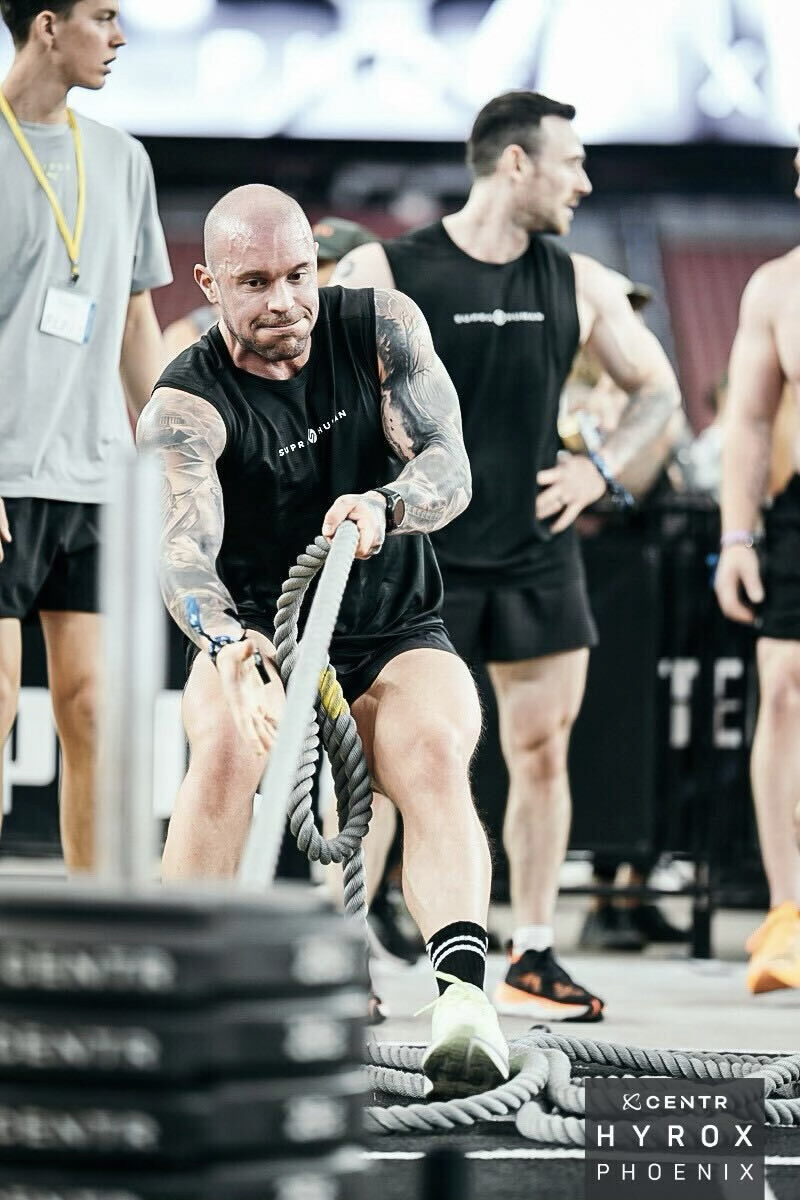
Hybrid Training in a Nutshell
Hybrid training means developing strength and endurance together, not sacrificing one for the other.
The specific term “Hybrid Training” and the “hybrid athlete” concept was popularized around 2015 by Alex Viada in his work defining the practice as training for multiple, non-complementary, or even conflicting disciplines (e.g., heavy lifting and high-volume running).
Often, athletes use strength training to improve their endurance performance. Sprinters, for example, lift heavy to produce more force into the ground and ultimately run faster. In those cases, the gym work supports the sport. One method exists to enhance the other.
Hybrid training takes a slightly different approach. Instead of prioritizing one quality and using the other as assistance, you deliberately train both strength and endurance to improve side by side. You’re not lifting just to help your running, and you’re not running simply to offset your lifting. You’re developing both systems intentionally. Thus, building a body that’s strong, capable, and well-rounded across multiple demands.

Why does that matter?
Because real life rarely asks you to do just one thing.
If you’re a cyclist, strength work improves power and stability.
If you’re a runner, lifting improves running economy and resilience.
If you sit at a desk most of the day, both will improve your energy, posture, and long-term health.
Does Cardio Kill Gains?
Short answer: No.
The old myth that cardio “kills your gains” is largely overblown. In fact, aerobic training can improve recovery between sets, increase work capacity, and support health and longevity.
The real issue isn’t cardio. It’s poor planning.
Hybrid training works incredibly well. But only when programmed intelligently.
The Challenges (Because There Are Some)
Hybrid training asks a lot of your body. When done poorly, it can lead to:
- Excess fatigue
- Under-recovery
- Increased injury risk
- Spinning your wheels without real progress
Strength and endurance both create stress. Combine them without a strategy and you simply accumulate more fatigue than you can recover from.
More fatigue the higher the risk of injury.
That’s why smart programming — and correct recovery — matter.
Sleep, nutrition, hydration, and intelligent session timing aren’t “nice to have.” They’re non-negotiable.

Who Is Hybrid Training For?
Technically? Anyone.
Practically? It’s best suited to people who already have some training experience in either strength or endurance.
If your body is already adapted to one stimulus, you’re better placed to add additional forms of training. Beginners can absolutely move toward hybrid training, but they should build a foundation first.
We’re seeing a rise in “hybrid athletes” — people who want to lift well, move well, and perform across multiple domains.
And honestly? That’s a smart long-term strategy.
Specialization has its place of course. But durability wins over decades.
Considerations When Structuring Hybrid Training (Without Burning Out)
1. Don’t cram everything together: If you can, give strength and conditioning sessions breathing room. Your performance will thank you.
2. Hard + hard isn’t always smart: Just because you can stack heavy squats and sprint intervals doesn’t mean you should.
3. Respect your long aerobic work: Longer steady sessions build your aerobic base, it deserves its own dedicated time, and are just as important as your strength and shorter training sessions.
4. Lift with intention: We’re still chasing strength improvements, so it’s important to train hard, but we must make sure we’re able to recover.
5. Fuel correctly to support your output: Hybrid training requires fuel. Under-eating is one of the fastest ways to stall progress and recovery.

Programming hybrid training is less about doing more and more about sequencing better.
Why We Like It
Hybrid training builds:
- Strength
- Aerobic capacity
- Muscular endurance
- Mental resilience
- Versatility
And perhaps most importantly… confidence.
There’s something powerful about knowing you can handle a long run, lift heavy, or throw yourself into an event like HYROX without feeling completely out of your depth.
After competing in Arizona, what stood out wasn’t just performance, it was preparation. The athletes who performed the best weren’t specialists. They were balanced.
Strong enough. Fit enough. Durable enough.

In Summary
Yes, you can build strength and improve endurance at the same time.
But you need:
- Smart programming
- Strategic recovery
- Adequate fuel
- Patience
Hybrid training isn’t about doing everything.
It’s about doing enough of the right things to be dangerous in more than one arena.
And in our opinion, that’s what real capability looks like….
Opportunity for Taking Action
Already a member of Supra Human? Message your coach and choose your next target.
Not a member yet? Learn more about the Supra Human Lifestyle approach and see if it’s a fit.
Want more insights from coaches and the Supra Human leadership team? Explore more on the blog.