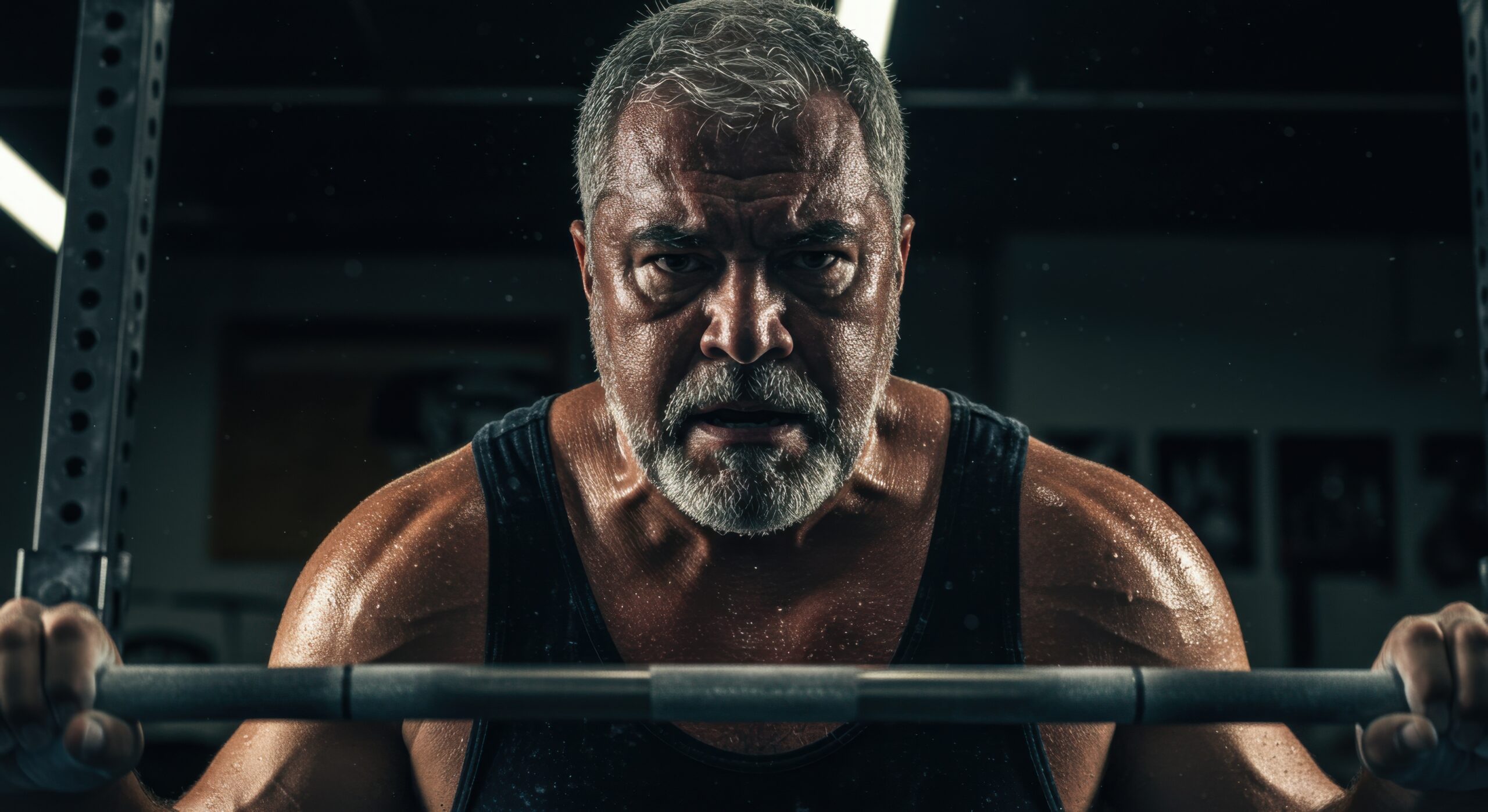
For decades, aging has been framed as an unavoidable slide into softness, slowness, and physical decline. But I can assure you that the narrative is outdated and, frankly, inaccurate. The truth is simple: aging isn’t a decline — it’s a shift we need to make.
Yes, your physiology will change to some degree. However, your potential? That remains strong.
Within Supra Human, we’re redefining what it means to age, not through cliché optimism, but through science, strategy, and real-world proof.
And this is how we do it.
Reframe Aging: You’re Not On A Decline To The Finish — You’re Just Entering a New Phase
Aging isn’t a cliff; it’s a shift in emphasis.
In your 20s, you can get away with inconsistency, poor sleep, and questionable nutrition.
In your 40s, 50s, and beyond, you simply can’t! But that doesn’t reduce your potential.
Instead, it removes the noise.
Less ego lifting. More intentional training.
Less random diets. More strategized nutrition.
Muscle: Your Longevity Engine
Lean mass is one of the strongest predictors of long-term health. From metabolic function and insulin sensitivity to bone density and all-cause mortality. Research consistently shows that:
- Higher muscle mass is linked to reduced risk of chronic disease (Srikanthan & Karlamangla, 2014).
- Strength levels correlate with lifespan and independence (Volaklis et al., 2015).
- Maintaining muscle helps regulate energy balance, making fat loss easier across the decades.
Put simply:
Muscle isn’t just cosmetic. Muscle is survival.
And this is good news, because muscle remains highly responsive to real training — at 40, 50, 60, and beyond.
You Can Build Muscle in Every Decade of Life
Aging does not eliminate your ability to get stronger, leaner, or more athletic.
The evidence is unequivocal:
- Adults in their 60s, 70s, and even 80s can still build muscle at meaningful rates with progressive strength training (Peterson et al., 2010).
- Your muscle still responds robustly to weight training, provided protein intake and training stimulus are sufficient.
- Strength gains are achievable at any age. We often see that it can be faster in some individuals, due to their greater consistency, discipline, and coachability as they age.
Your physiology is still capable.
But your strategy simply matters more than ever.
So, What Changes… and What Stays the Same
What changes:
- Recovery between workouts may take longer.
- Sleep quality requires more intentional management.
- Training volume tolerance may shift.
- Hormonal trends change the margin for error.
What doesn’t:
- Your ability to build muscle.
- Your ability to lose fat.
- Your ability to become stronger and more athletic.
- Your capacity for discipline and long-term consistency.
When people say “you can’t build muscle after 40,” what they really mean is:
You can’t build muscle if you keep training like you did at 22.
The Pillars of a Legendary Physique
A strong, lean, high-performing body after 40 doesn’t happen by accident.
It happens when the five pillars align:
1. Strength Training
Heavy, structured, progressive resistance training is non-negotiable.
2. Precision Nutrition
Protein-dense meals, macro awareness, and fueling that supports muscle retention and metabolic health.
3. Hormonal Optimization
For some individuals, assessing testosterone, thyroid, vitamin D, and other metabolic markers provides clarity. This can cover up any gaps and unlock new levels of progress.
4. Recovery Strategy
Quality sleep, smart training, and lifestyle management that keeps stress and inflammation controlled.
5. Relentless Consistency
The real differentiator.
Legendary physiques are not built on perfection, but consistent behaviours over time.
Why People Actually Decline with Age
Most decline is not biological. It’s behavioral.
People lose muscle not because they age, but because they stop stimulating it. They gain fat not because metabolism “crashes,” but because activity drops and nutrition drifts. They feel stiff, weak, and slow because they no longer train with intent.
Decline is not inevitable. However, it is the default for people without a strategy.
Why Building a Legendary Physique After 40 Is Often Easier
This is the secret no one talks about: Many people build their best physiques later in life.
Why?
- Discipline improves.
- Ego decreases.
- Awareness increases.
- Life experience fuels consistency.
- You train with purpose, not impulse.
As we age, we waste less time. We aren’t chasing novelty, we’re pursuing mastery.
Case Study: Terrell Owens at 51 – A Legendary Physique at Any Age
Terrell Owens holds a legendary physique and performance. At 51, he represents possibility. Not because he avoids aging, but because he adapts to it.
His physique is the product of:
- Ruthless consistency
- Structured strength training
- Precision nutrition
- High standards
- Elite-level habits
That’s why we featured him in our Supra Human Times Square billboard “Legendary Physique at Any Age” campaign as a living example of what’s possible when you align your training, nutrition, and standards with your potential.
Just like the countless transformations we have at Supra Human. He’s a powerful reminder that potential doesn’t expire, but when utilized, it compounds.
The Supra Human Advantage
At Supra Human, we work with ambitious individuals who refuse to slow down simply because the world expects them to.
Our coaching combines:
- Precision strength/hypertrophy programming
- Personalized tele-nutrition and accountability
- Evidence-based recovery and performance protocols
- A systems-based approach designed for longevity, not quick fixes
This is the formula that turns potential into outcomes… at any age.
Your Best Decade Is Still Unbuilt
Your next chapter of life doesn’t need to be defined by decline. You can be defined by the strongest, leanest, most capable version of you.
Age is not your barrier. The lack of strategy is.
If you’re ready for a legendary physique, the one you know you’re capable of, Supra Human is your guide.
Your legendary physique is still unbuilt. Let’s build it.
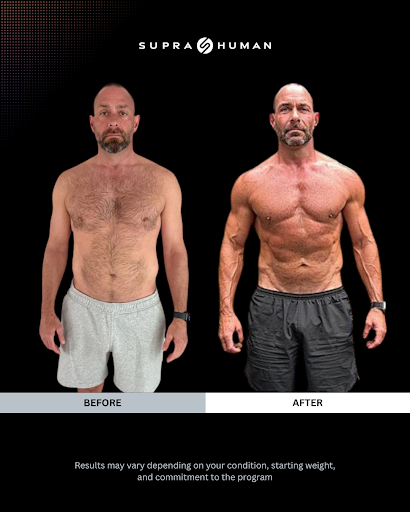
Want more proof? Check out Supra Human Results page and our client Tony, building a legendary physique at age 56.
References
- Peterson, M. D., Rhea, M. R., Sen, A., & Gordon, P. M. (2010). Resistance exercise for muscular strength in older adults: A meta-analysis. Ageing Research Reviews, 9(3), 226–237.
- Srikanthan, P., & Karlamangla, A. S. (2014). Muscle mass index as a predictor of longevity in older adults. American Journal of Medicine, 127(6), 547–553.
- Volaklis, K. A., Halle, M., & Meisinger, C. (2015). Muscular strength as a strong predictor of mortality: A narrative review. European Journal of Internal Medicine, 61, 21–30.