
“You don’t need to feel thirsty to be dehydrated — and you don’t need to be an athlete for it to affect performance.”
Hydration is one of the simplest yet most underrated factors when it comes to performance, in and out the gym. Even mild dehydration can limit both physical output and mental clarity, impacting everything from training intensity to focus at work.
True hydration isn’t just about drinking enough water; it’s about maintaining the right balance of fluids and electrolytes, in order to optimize energy, recovery, and performance.
Why Hydration Matters for Performance
Water makes up around 60% of body weight and plays a role in supporting temperature regulation, transporting nutrients around the body, and lubricating joints. When you sweat, you lose both water and electrolytes (e.g. sodium, potassium, magnesium, chloride). These minerals are critical for optimal performance.
Research has shown that just a 2% loss in body mass through fluid can impair endurance, strength, and concentration (Judelson et al., 2007). For a 165lbs individual, that’s barely 50 fl oz, which can be easily lost during a tough session or hot day.
If you are dehydrated, common signs may include reduced training performance, fatigue, headaches, and brain fog. Due to the general nature of the symptoms, this can easily be mistaken for overtraining or lack of sleep.

Hydration, Strength, and Recovery
Dehydration can affect physical performance in a number of settings. It is commonly known that dehydration can impact endurance activities, such as running, hiking, and cycling. However, strength and power decline too. Studies have shown reductions in muscle power when adequate hydration is not maintained (Goulet et al., 2011).
Proper hydration keeps blood volume and nutrient delivery high. This enhances recovery and performance while reducing perceived effort during workouts. Better performance and better recovery = better progress!
Electrolytes: More Than Just Salt
It is important to note that hydration isn’t just drinking water; it’s also replacing electrolytes. Low sodium levels can lead to fatigue, dizziness, and cramping, even if total water intake seems high. This is often the case when you feel dehydrated, but seem to be drinking plenty of water. Below are the key electrolytes and their roles within the body:
- Sodium: Fluid balance and nerve signaling
- Potassium: Muscle contraction and heart function
- Magnesium: Energy production and relaxation
- Chloride: Supports sodium’s function
If you train hard, sweat heavily, or exercise in heat, you may want to consider an electrolyte supplement or adding a pinch of salt to one or two of your daily meals.

Hydration and Mental Performance
As mentioned earlier, hydration affects not only physical performance but also cognitive performance. A 2019 study found that dehydration significantly impairs short-term memory, attention, mood, and reaction time, while rehydration rapidly restores performance (Zhang et al., 2019). In other words, even mild dehydration can cloud thinking and reduce productivity. Something I consider a critical issue for high-performing professionals like those in the Supra Human program. Staying hydrated enhances focus, mental clarity, and decision-making throughout the day.
Proper hydration keeps blood volume and nutrient delivery high. This enhances recovery and performance while reducing perceived effort during workouts. Better performance and better recovery = better progress!
How Much Should You Drink?
This is a little trickier to answer, as hydration needs will vary with body size, sweat rate, and environment. However, a simple framework that covers the basics is:
- Baseline (non-training days): 0.5 fl oz/lb bodyweight (85 fl oz for a 170lb male or female)
- Training days: Add 16-32 fl oz per hour of exercise
- Hot conditions: May require further increase in fluids and electrolytes
A practical rule: pale-yellow urine signals good hydration; dark or clear urine often indicates imbalance (too little or too much). This is a really simple, yet effective way to monitor your hydration.
Key Takeaways
- Even a 2% fluid loss can impair strength, endurance, and focus.
- Hydration affects both performance and cognition.
- Electrolytes matter — sodium, potassium, and magnesium are essential.
- Aim for 85 – 100 fl oz per day, plus extras for training or heat.
- Small, consistent habits deliver the best long-term results.
If your workouts feel flat or your energy dips throughout the day, it might not be your training plan; it might be your hydration. If you feel this may be the case, reach out to your coach to discuss further.
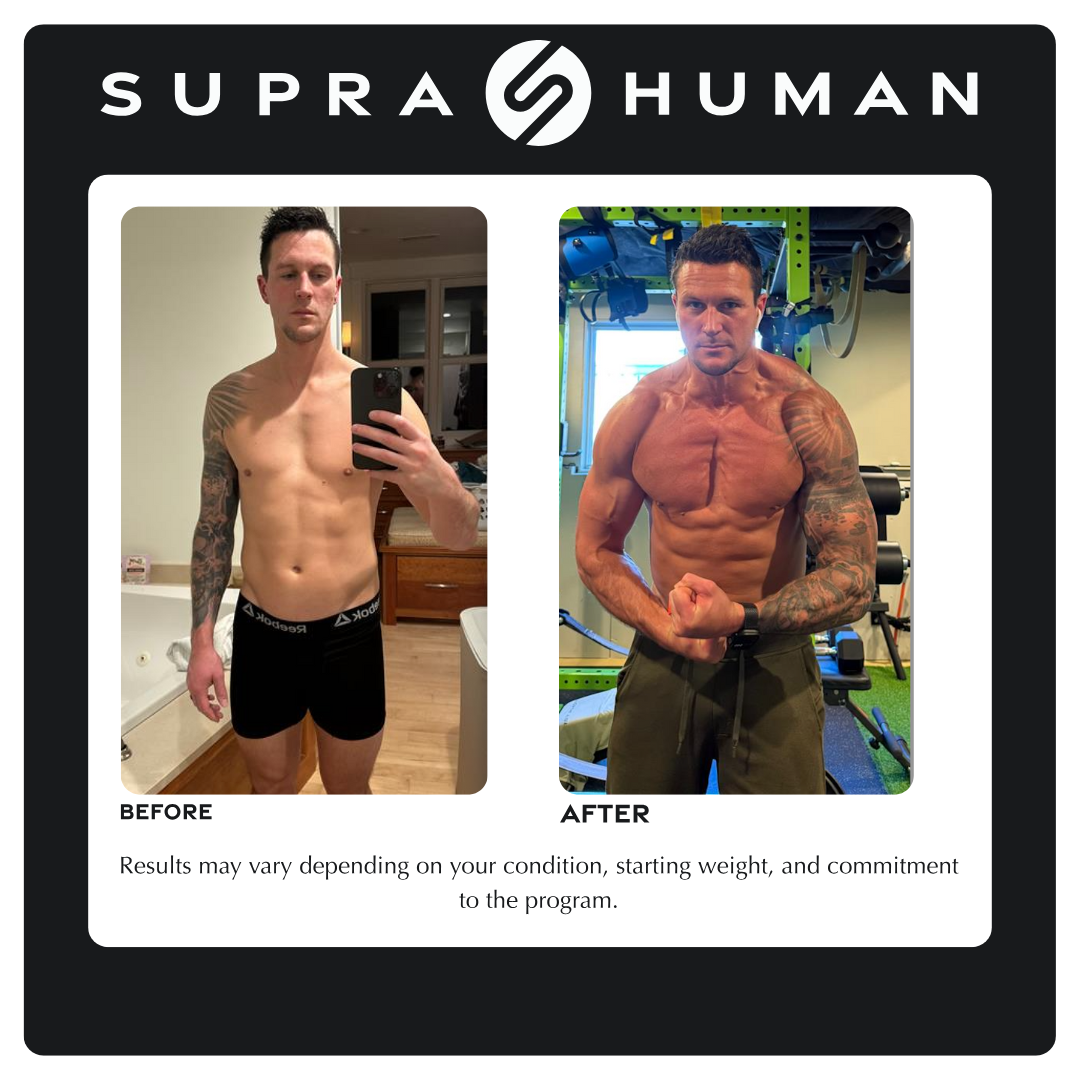
Check out this epic transformation. Coach Chris Cecere and client Jake Lewendal have been putting in some EPIC work!
References
- Judelson, D. A., et al. (2007). Effects of dehydration on strength, power, and resistance exercise performance. Medicine & Science in Sports & Exercise, 39(10), 1817–1824.
- Goulet, E. D. B. (2011). Effect of exercise-induced dehydration on time-trial exercise performance: a meta-analysis. British Journal of Sports Medicine, 45(14), 1149–1156.
- Zhang, N., Zhang, S., Duan, W., & Ma, G. S. (2019). Effects of dehydration and rehydration on cognitive performance and mood among young adults. International Journal of Environmental Research and Public Health, 16(11), 1891.